


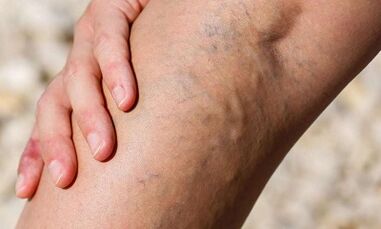
Varicose veins are a fairly common pathological condition, characterized by an increase in the diameter of the lumen, thinning of the venous walls and the appearance of "nodes".
Translated from Ancient Greek, “varicose veins” means “swelling.”Theoretically, such a disease can appear on any part of the body, but the most common lesion is the legs.
The essence of the problem
Veins in the body play a very important role, as they represent a network of branched reservoirs that transport blood from tissues to the heart muscle.In the lower extremities, this network is expressed in the form of deep and superficial veins, interconnected by an emergency blood drainage system.
As a rule, the main emphasis falls on the deep veins, so they are noticeably stronger and more voluminous.And about 15% of the total work remains on the surface.
The heart is a “pump” that pushes blood through the veins.Some blood flows in your veins against gravity (when you walk, move, or squat).When the muscles are relaxed (while standing), the blood flows downward, under the influence of the same gravity.But not everything is so simple;the valves placed on the walls of the vessels do not allow them to return.
In cases where the valves are “broken,” the veins are dilated and inflamed, so they cannot hold back blood flow.This process causes the veins to swell and bulge.Impaired blood supply becomes the root from which varicose veins on the legs begin.
Causes of varicose veins
There are many reasons for this:
- Varicose veins can be hereditary, that is, there is a congenital weakness of the walls of blood vessels.
- The appearance of varicose veins can be associated with the vital activity of a person and his immunity.
One thing is certain, the disease does not simply manifest itself, something must serve as an impetus.
During sedentary work, blood stagnation in the veins, or rather in the pelvis, occurs, which subsequently manifests itself in health problems.Varicose veins result from a sedentary lifestyle, so even with standing work there are no obstacles to their appearance.
It is not for nothing that this disease is mainly called an occupational disease of sellers and hairdressers.
Obvious provocateurs also include:
- excess weight (obesity),
- frequent weight lifting,
- leg injuries.
Another factor is increased intra-abdominal pressure.The size of the veins constantly changes, when inhaling: the veins narrow, when exhaling, on the contrary, they expand.When a person pushes hard, the veins experience severe stress and begin to expand under the pressure created.
Of course, this doesn't mean everyone is at risk, but chronic constipation and coughing can cause varicose veins.
Varicose veins during pregnancy
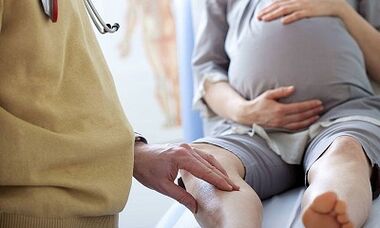
Very often varicose veins can be found in pregnant women.The constantly expanding uterus puts involuntary pressure on the veins coming from the legs.In this case, nature protected women from serious consequences and endowed the body, during pregnancy, with a sufficient amount of sex hormones that make the walls of blood vessels plastic and flexible.As a rule, the disease here is reversible;after childbirth, the veins return to their previous state.
Prevention methods
Absolutely any disease is much easier to prevent than to cure, and varicose veins are no exception.Let's see the main preventive measures:
- Forget about tight and uncomfortable shoes.Women should remember that "everyday" heels should be no higher than five centimeters.In the evening, treat your feet with a massage and a cool bath, then raise them higher and lie in this position for 15 minutes.
- Wear loose clothing that does not have elastic or tight belts.
- If possible, walk more barefoot on cobblestones.At the very least, treat yourself to such therapy during your vacation.
- Check your diet.Eliminate, or at least reduce, the consumption of spicy, salty and smoked foods.The same goes for alcohol.
- An excellent prevention of varicose veins is sport.An exception may be the initial stage of the disease.If you notice the first signs and symptoms, the load should be light and be sure to consult a doctor before starting training.
- If you have a sedentary job, try to get up as often as possible and walk around the room.Do basic exercises, at least jump a little.Do not cross your legs when sitting, this is very harmful to blood circulation.
- Don't overdo it with baths, saunas and hot tubs.After "hot" procedures, be sure to rinse with cold water.
Stages of development of varicose veins
- First phase.There is no pain or discomfort, only cosmetic defects are observed.A branching pattern of veins appears on the legs, "stars" and "nets" appear.In the evening my legs swell a lot.
- Second phase.There is obvious swelling in the ankle area and a strong heaviness in the legs.Cramps, numbness, tingling and tingling sensations may occur in the evening.
- Third phase.Constant and severe swelling of the legs, compactions form on the skin, pigmentation changes in some places, itching and dermatitis appear.
- Fourth phase.Trophic ulcers appear on the skin of the legs.
What measures to take in the initial phase
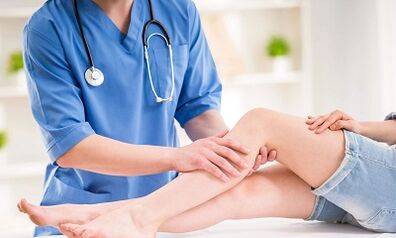
Varicose veins of the lower extremities, if they are in their infancy, respond well to treatment;it is quite possible that a competent "fight" will stop its development.
First, follow all the preventive measures described above.Review your wardrobe, if necessary, eliminate all “harmful” things and do the same with shoes.Give your feet a contrast shower, walk barefoot more and balance your diet.
Secondly, at the first symptoms, buy compression clothing, these can be tights or hold-ups.Their principle of action is to distribute pressure along the legs in such a way as to normalize blood circulation and significantly reduce symptoms.
As for consultations, it is necessary to visit not only a phlebologist, but also a gynecologist (for women) and an orthopedist.It is likely that hormonal contraceptives or flat feet can cause circulatory problems.
Prevention of varicose veins during pregnancy
Almost every woman during pregnancy faces problems with leg swelling and circulatory problems.The enlarged uterus constantly puts pressure on the inferior vena cava, preventing its normal functioning.
But, as mentioned above, varicose veins in this case are reversible;the important thing is to take the necessary preventive measures in time.
- Buy comfortable orthopedic shoes in which your feet will not get tired when walking.
- Take daily walks.Do not sit or stand for long periods of time.To prevent venous stagnation, place your feet on a hill while resting.
- To prevent swelling, wear compression clothing.
- Light physical exercises involving only the legs will be of great help.The simplest movements of the feet in different directions are sufficient.
- Vitamin C is very effective in preventing varicose veins.It has many beneficial properties that will give elasticity to the veins, simultaneously reducing the risk of many diseases.
Treatment of varicose veins
Complete relief from the disease is possible only through surgical intervention.Medication and exercise are used as auxiliary methods.
Phlebectomy
Operations can be surgical in nature or using the latest technologies.One of the first is phlebectomy, or the removal of varicose veins.
Laser
In the second group there is laser coagulation;there are no engravings;thermal radiation is applied to the problem area of the body.
Sclerotherapy
Another way to get rid of varicose veins is sclerotherapy.A special solution is injected into the damaged vein using a thin needle, which glues the walls of the vessels and subsequently fixes them.
But no matter how much doctors would like, they simply are not able to eliminate the main cause of varicose veins - the weakness of the walls of blood vessels.Only you have the power to prevent disease through preventative measures.
Special exercises
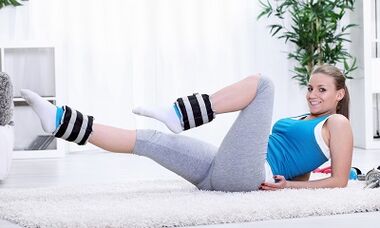
Below we will list a number of physical exercises that will not take much time, but the effect will be noticeable.You can make them at home.
- Exercise 1.Lie on the floor, raise your legs until they form a 90° angle to the floor and start moving your toes "from you to yourself".Repeat 10 times.
- Exercise 2.In a lying position, raise your legs and “draw” circles with your feet, 10 times in each direction.
- Exercise 3.The familiar "birch" has a good effect.From the lying position, lift your legs and pelvis, resting the latter on your hands.Lock in this position for a few seconds.Repeat 4 times.
- Suggestion:take time to stretch.Firstly, your body will always be flexible, and secondly, this will help move blood from your veins.
- Exercise 4.Lie on the floor with your feet together, knees pointing in different directions.Grab your feet and pull them towards you.Stay in this position for a while.Repeat the exercise 4 times.
- Exercise 5.Lie on your left side and rest on your elbow, with your right hand grasp your right foot.Perform several elastic movements with the hip back (trying to reach the heel up to the buttock) and hold the position for 10 seconds.Perform similar manipulations with the left side.
Ointments
The purpose of drugs in the treatment of varicose veins is to restore elasticity and normal conditions to the veins.A specialist will recommend the necessary drug for complex treatment.
A cream containing an anticoagulant can have a good preventive effect.The role of the latter is to relieve pain in the affected areas and strengthen blood vessels.Often anti-varicose cream preparations contain a number of vitamins: C, B5 and B1, thanks to which the regeneration period is significantly shortened.
Tablets that are also common in treatment are:
- improve vascular tone;
- alleviate the inflammatory process;
- accelerate blood and lymphatic flow;
- eliminate microcirculatory disorders.
Drugs in tablets are divided into several groups: corticosteroids, phlebotonics, antithrombotics and non-steroidal analgesics.
Folk remedies
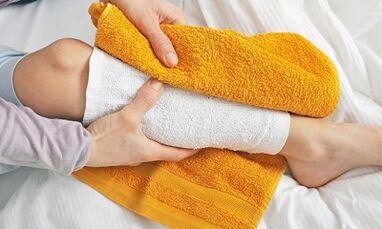
The conservative treatment method is effective in the first stage of varicose veins, when a person feels heaviness in the legs and notices a venous network on the skin.The sooner measures are taken to eliminate the problem, the faster and more accurate the results will be.Below are some simple but effective recipes.
Garlic compress
A paste is prepared from grated garlic and butter, in a 1:2 ratio, which is subsequently applied to the affected areas, fixed with paper and a bandage.The duration of the exposure is nocturnal;in the morning rinse your foot with warm water.
Chestnut
Chestnut tincture for internal use.Fifty grams of dry product pour 500 ml of alcohol.The resulting product must be infused for 14 days and filtered.Take three times a day before meals with water.
Ointment based on Kalanchoe
A one-liter jar should be filled half with leaves and the rest with 70% alcohol.The resulting tincture should be placed in a dark place for two weeks, but shaken daily.The prepared ointment is rubbed into the damaged areas daily.
Love yourself and be healthy!